

TL/DR – Summary:
- Headlines often sensationalize security breaches for impact, overshadowing the underlying lessons.
- With an analytical or attacker mindset, you can turn basic news reports into actionable ideas applicable to your own organization
- By practicing asking “So what does this imply..?” you can get real insight from shallow news stories.
Intro
We’ve all seen those clickbait cybersecurity headlines declaring “Company X breached!” or “Hundreds of thousands of records stolen!”. They grab our attention, but do the articles tell the whole story or provide practical value?
They can. It’s all in how you read them.
The key is to read between the lines by thinking like an attacker or intelligence analyst. Either role needs to look at a fact and ask if there is some additional meaning behind it, guess at why it might be true and what that means. So, we ask ourselves… “Why is this? What does this imply…?”
As an example, let’s crack open two recent cybersecurity news stories to uncover additional facts hidden within the reporting…
Case 1: Mandiant’s Twitter Hack – More Than Just “Oops”
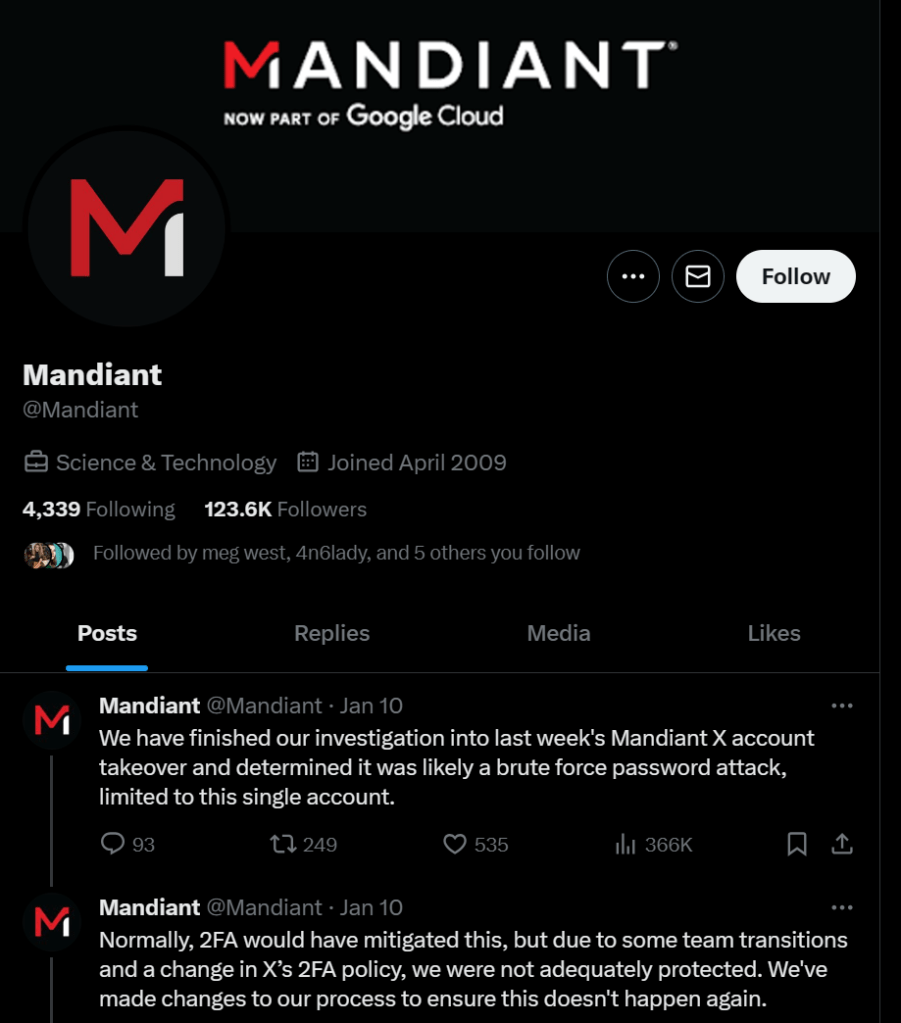
Story: Mandiant’s X Account Was Hacked Using Brute-Force Attack (thehackernews.com)
Mandiant’s X/Twitter account was recently compromised by a brute force attack and used to launch a cryptocurrency scam. The basic facts suggest an impactful security oversight; but dig deeper – the story holds more.
The attack used brute-force password cracking, which Mandiant cited as being susceptible to on account of X’s February move to restrict SMS-based MFA to paid accounts.
This implies Mandiant previously relied on SMS-based MFA for their X/Twitter account, and became exposed last year when X moved SMS-based MFA to paid-tier accounts only.
Now, think like an attacker – “Why might these facts be? And what does that imply?”:
- This might indicate broader acceptance of SMS-based MFA at Mandiant (Which is arguably the most vulnerable form of MFA).
- Other companies that previously relied on SMS-based MFA for X might also have simply relaxed MFA after X’s policy change (especially as Mandiant is probably MORE security-minded than many), suggesting a potentially broader vulnerability.
Here’s how to apply these insights to your organization:
- Does your company have one or more X accounts? Are they tempting targets with broad reach? Are they exposed similarly to Mandiant’s?
- Are you using SMS-based MFA in the first place? Can you move to a more secure, (e.g. app-based) solution?
- Assuming you are using MFA, have you thought about how it might be compromised?
- For some great food for thought, see this post by Matt Saglam for some attacks that might apply
- How many of these could your team prevent, make harder, or detect?
Bonus: The article suggests that crypto-drainer fraud is on the rise… while most companies don’t hold large crypto accounts that could be raided, a public service announcement to employees noting the risk and warning signs they might encounter in their personal lives could be a great “Above and beyond” thing for a security team to do.
Case 2: HMG Healthcare Data Heist – Reading Between the Lines

Story: Texas-based care provider HMG Healthcare says hackers stole unencrypted patient data | TechCrunch
On the surface, this is another story about a healthcare company getting compromised as part of a broader trend.
But the details of HMG’s breach notification revealed a few interesting facts:
- They didn’t know exactly what was stolen.
- The attack took several months to detect.
- They note that they took steps to “ensure…stolen files weren’t further shared by the hackers.”
Now, when you think about these facts like an analyst or attacker, (“So what does this imply..”) you can draw a few useful conclusions:
- HMG probably has data collection and monitoring gaps in their SIEM:
- Long detection time suggests weaknesses in their security monitoring – likely around detection rule coverage or time to accurately process signals.
- The inability to know what was stolen speaks to gaps in the breadth & coverage of logs and audit trails – they can’t tell what was accessed because they literally don’t record enough access audit logs to do so.
- Depending on exact regulatory needs, one or both of these could be problematic (e.g. in jurisdictions where the ability to produce records within “x timeframe” is required).
- There’s a real probability that HMG paid a ransom.
- A corporate entity has few means to “Ensure data was not shared further” – once it’s out the door.
- The only lever they can pull once data is in attacker hands is negotiation – i.e. paying them off to destroy the data.
Now, use this as a prompt to evaluate your organization’s readiness by asking things like:
- How does your organization review and validate their alert coverage and timeliness of response? How actively evolved and tested are the rules?
- Do you know the limits of what you can detect and audit? Have you validated this via tabletop or practical exercise?
- Do you have a defined incident response plan for a similar breach? Does your organization know how they would respond to a ransom?
Takeaways for Every Pro:

- Threat intel is an ongoing need for a healthy security organization, and it doesn’t just live in dedicated analyst roles. Even a random team member reading the news can acquire valuable insights and spark meaningful discussion.
- Go beyond the headlines: Apply critical thinking and look for hidden clues.
- Think like an attacker to identify potential targets and exploitation paths.
- Learn from others’ mistakes: Use the information you glean as training & assessment opportunities to strengthen your own organization’s posture.
So, the next time you see a cybersecurity headline, take a deep breath, put on your analyst hat, and start extracting the real intel. It’s out there, waiting to be discovered.
By ‘hacking’ the headlines, you’re turning news into a cybersecurity advantage!
What security takeaways have you uncovered from recent news? Share your insights in the comments below!
 Tech Security Bytes
Leave a comment